
Grenade Drop Mechanisms: Terminology, Risks and Limits of Online Claims
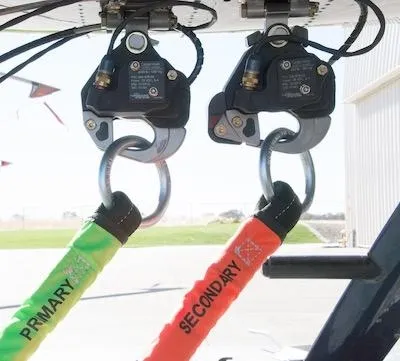
A search result mentioning grenade drop mechanisms can mix ordinary cargo hardware with weapon systems. Similar vocabulary does not make those devices interchangeable. A general-purpose release-hook listing is not evidence that a device is suitable, approved or lawful for use with explosive ordnance.
This article is a non-operational discussion of terminology and online claims. It does not explain the construction, modification, attachment, arming, triggering or use of a grenade-release system.
Three different claims are often confused
A component can have a stated load capacity, a supplier can advertise defense-sector work, and a complete system can have a particular authorization. These are different claims, supported by different evidence. None should be inferred from a photograph or from the inclusion of a search keyword in a page title.
Images need accurate captions
Generic lifting hardware should be labelled as generic hardware. An illustration of cargo equipment must not be passed off as a working grenade mechanism. The image accompanying this article comes from a cargo-related archive and does not document a weapon configuration. PRD products elsewhere on the site are not represented as approved for that use.
Why a blog cannot establish suitability
Online product summaries omit the wider legal and institutional context of ordnance handling. A discussion of ordinary release hooks cannot substitute for that context, nor turn an improvised device into an authorized system. Hazardous items should not be used to experiment with consumer or industrial release hardware.
Continue with the underlying terminology
For a general introduction, the release-hook guide explains the broad distinction between holding a load and controlled separation. The application index covers industrial and cargo contexts. Those pages support understanding of the terminology, without providing weapon-construction or deployment guidance.