
Offshore Release Hooks: Corrosion, Inspection, and Harsh Environment Selection
Offshore hook selection has two different evidence problems: whether the hardware suits the load arrangement, and whether it remains serviceable in the intended environment. A material name or a coating description is not a complete answer to either question.
Separate the discussion into exposure, maintainability and documented limitations. This makes it possible to compare supplier proposals without treating all marine or offshore uses as one application.
| Exposure or constraint | Procurement question | Documentation to request |
|---|---|---|
| Salt spray and trapped moisture | Which surfaces and interfaces need attention? | Material, finish and manufacturer care instructions |
| Difficult access | Can inspection points be reached in the installation? | Installation drawing and service-access requirements |
| Mixed components | Are replacement parts and connected hardware compatible? | Approved parts list and assembly identification |
| Hazardous location | What approval applies to the complete proposed arrangement? | Applicable certificates and their limitations |
Condition records are more useful than cosmetic labels
Discolouration, coating damage and visible corrosion should be described and located, not simply recorded as a pass or fail from a photograph. Evaluation belongs against the manufacturer criteria and the responsible inspection process. Do not invent allowable pitting depths or removal limits from a general-purpose blog.
Pneumatic does not automatically mean suitable offshore
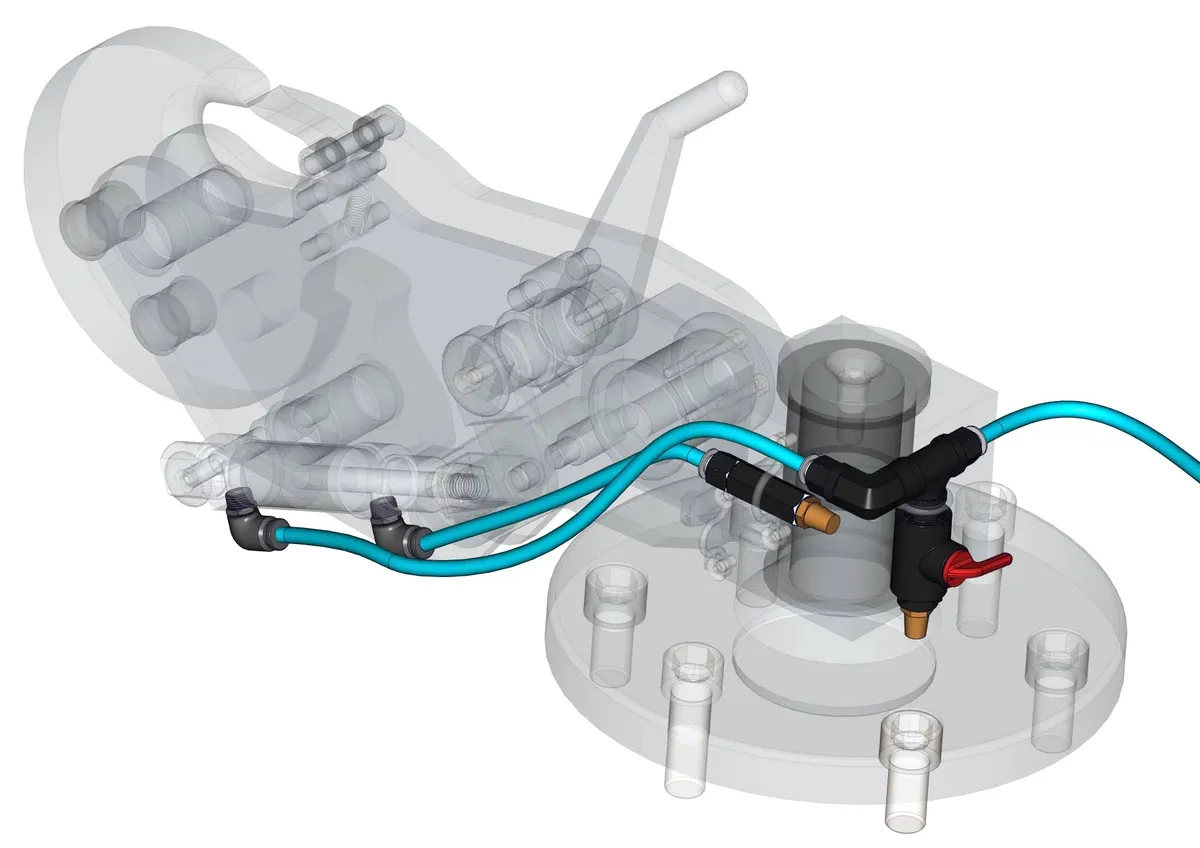
A pneumatic option can be relevant where compressed air is available, but availability of air is different from verified suitability for the installation. The complete assembly may include materials, accessories and interfaces with their own limits. Ask the supplier to identify the exact configuration being quoted and the evidence supporting its intended environment.
An inspection plan must survive a change of crew
Keep model identity, location, approved documentation, recorded observations and the disposition of previous findings together. If a replacement assembly changes access or servicing requirements, update the records. This is particularly valuable for temporary equipment moved between projects, where assumptions from one installation may not apply to the next.