
Release Hooks for Packaging Drop Testing: Repeatable Product Durability Tests
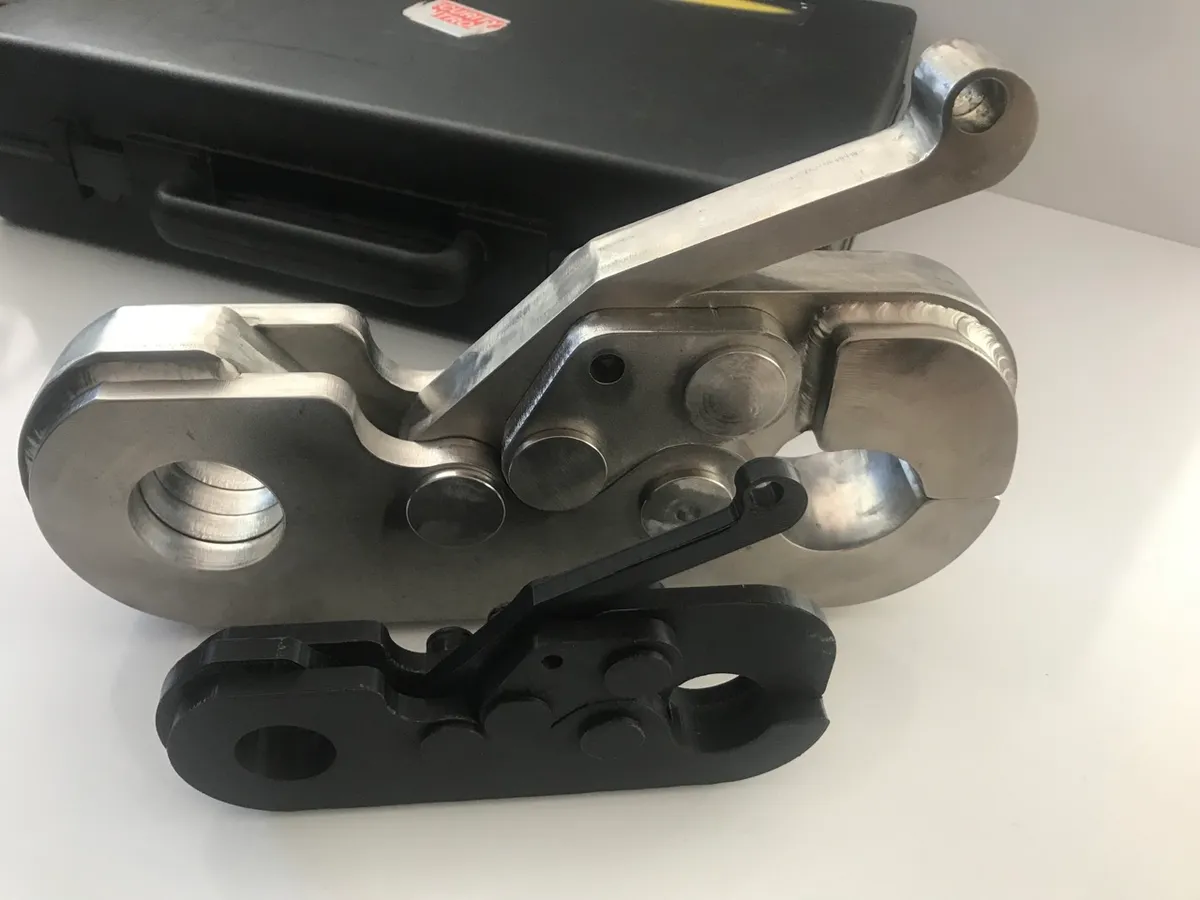
A packaging drop test is useful only when the test method and release arrangement describe the same event. A release hook can separate a suspended test article from its support, but it does not by itself establish a valid package test. The attachment must not reinforce the carton, alter its orientation, or leave a tether affecting the fall.
Start by separating three tasks: choosing the distribution test procedure, deciding how the specimen will be supported, and evaluating the release device. These decisions belong in the test plan before selecting a hook by capacity.
Package testing is different from proof loading
A proof-load test examines load-bearing equipment under a specified test load. A package drop test examines the response of the packaged product to impact. A hook used in either arrangement needs an appropriate rating, but the evidence from one test does not establish the result of the other. For a carton that cannot be suspended without modification, a platform-style drop tester may be more appropriate than a hook.
| Decision | What to record | Why it matters |
|---|---|---|
| Test method | Procedure, edition, shipment type and specimen condition | A convenient drop height is not a substitute for the selected procedure. |
| Release arrangement | Support location, attachment and any remaining fixtures | A fixture can change the package stiffness or the impact orientation. |
| Observation | Specimen identity, actual orientation and release anomalies | A repeat with a different release event is not directly comparable. |
| Outcome | Defined product and package acceptance criteria | Visible carton damage and product failure are different outcomes. |
Repeatability is more than a fast command
Command-to-release delay and variation between releases are different quantities. A consistent delay may be accommodated by the test setup; irregular separation makes comparisons less reliable. Ask for evidence relevant to the intended fixture and load range, rather than accepting an unqualified claim of zero delay. Record snagging, rotation or failed separation as setup anomalies, not automatically as product failures.
Use product data in its proper scope
PRD lists the WT series among its drop-testing products. That is a starting point for a supplier discussion, not a declaration that every WT model fits every packaging procedure. Provide the complete suspended mass, fixture description and test purpose. Request the current model documentation and an explanation of the proposed installation limits.