
Towing Release Hooks and Emergency Disconnection Under Line Tension
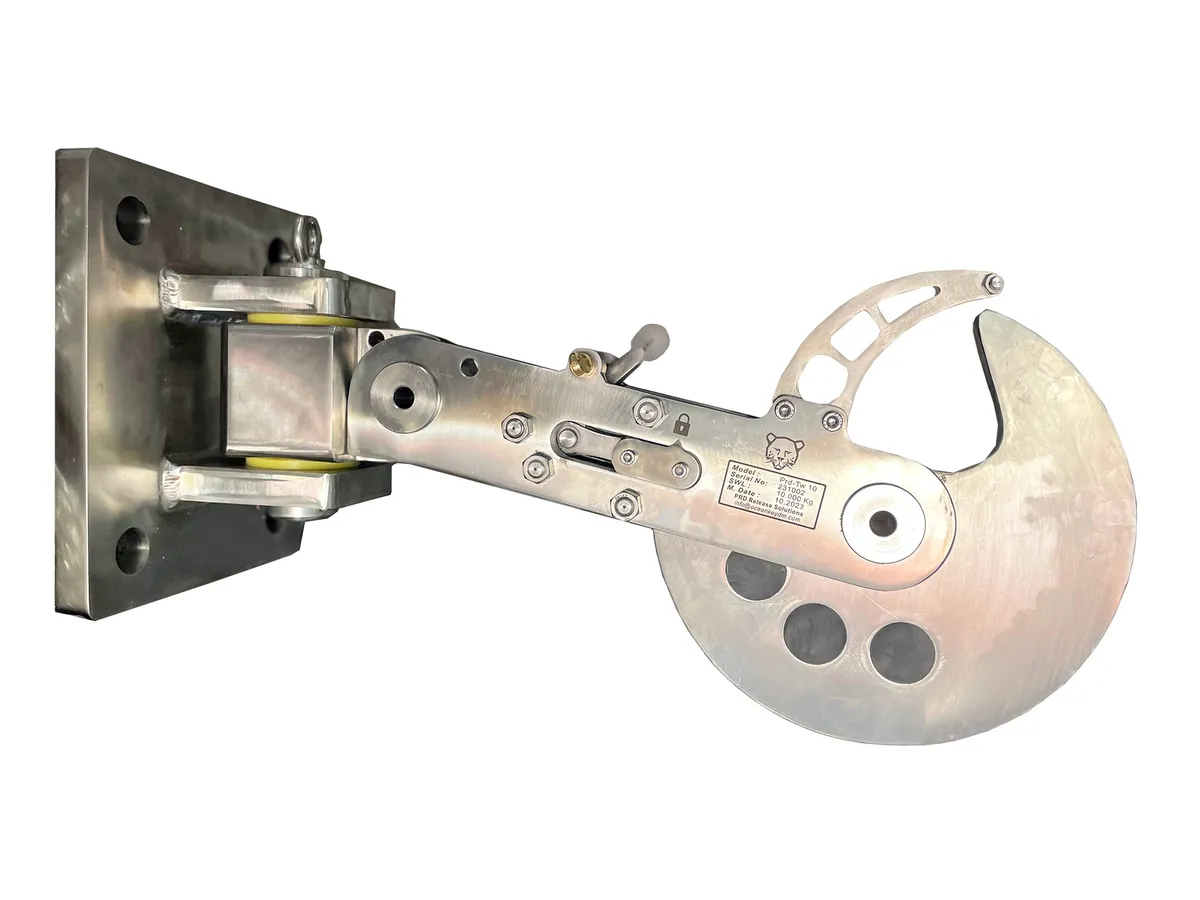
A towing hook has to be considered as part of a vessel's towing arrangement. Nominal holding capacity, permitted line direction and the conditions under which release is supported are separate questions. A large capacity number alone cannot answer all three.
For procurement, the most useful comparison is between documented operating envelopes. The vessel designer, towing-equipment supplier and operator need a shared description of the job, including the mounting arrangement and how the system is managed from the operating position.
| Supplier evidence | What it establishes | What it does not establish |
|---|---|---|
| Model rating | The stated capacity for the identified model and conditions | Capacity of the vessel foundation or every connecting component |
| Release specification | The documented conditions for release | Guaranteed release at every line angle or after damage |
| Installation drawing | The intended geometry and interfaces | Approval of a different vessel installation |
| Inspection instructions | Model-specific examination and service criteria | A universal replacement interval for every duty |
Release does not remove stored line energy
A tensioned towing line may recoil when it parts or is released. A remote command moves the operator away from the hook, but does not make the entire deck safe. MAIB safety guidance highlights snap-back hazards and communication during towing. Vessel procedures and the towing arrangement remain essential to managing exposure.
Compare hardware with hardware, installation with installation
PRD shows TW and TW-PN products on its towing application page. Use the model-specific documents when comparing them; a product-family photograph may show a variant different from the one quoted. Ask how mounting restrictions, environmental exposure and maintenance access are addressed in the proposed installation. Keep the vessel approval question separate from the product catalogue question.
Make the handover record useful
A meaningful equipment record ties the fitted model to its serial number, current instructions, installation documentation and service history. An unexplained substitution or undocumented repair breaks that chain. The practical goal is that a different crew or surveyor can understand the arrangement without relying on the memory of the original installer.